The Vallenato Festival or Festival de la Leyenda Vallenata, in Valledupar, is just around the corner. Find out what the 58th version of this traditional event will bring.
Vallenato is a beloved Colombian music genre rooted in the folklore of the Greater Colombian Caribbean. Its appeal stretches far beyond Colombia, captivating audiences in countries like Panama, Ecuador, and Mexico. What makes vallenato unique is its use of three traditional instruments that need no amplification: the caja (a small drum), the guacharaca (a scraped percussion stick), and the accordion, which carries the melody.
The genre’s classic rhythms, or “airs,” include Merengue, Paseo, Son, and Puya. In 2015, UNESCO recognized vallenato as an Intangible Cultural Heritage of Humanity, cementing its global significance.

What Is the Vallenato Festival?
The Festival de la Leyenda Vallenata, held annually in Valledupar since 1968, is a lively celebration of vallenato music and culture. It brings together the finest composers and performers for a series of competitions. The highlight is the accordion contest, where male and female players of all ages compete to be crowned King or Queen—the ultimate honor for vallenato artists.
The festival features categories for accordionists, including Youth, Children, Amateur, and Professional, each showcasing the genre’s traditional airs. Beyond the accordion, the event hosts competitions for songwriters, repentistas (poets who improvise songs), and piloneras (dancers performing the traditional Pilón dance, inspired by the wooden bowls used to grind corn). These contests highlight the depth and diversity of vallenato traditions.
What to see during the Festival de La Leyenda Vallenata?
The 2025 Vallenato Festival promises an unforgettable experience, especially with Paseo Vallenato, a local tour operator offering guided visits to festival highlights and cultural activities in nearby communities. This year’s festival spans eight days, from April 26 to May 3, with a packed schedule of events:
April 26: Willys Parranderos Jeep Parade
The festival kicks off with a colorful caravan of about 60 Willys jeeps, starting at Parque de la Leyenda Consuelo Araujo Noguera. This parade pays homage to the parranderos—partygoers who once roamed nearby towns with vallenato bands in tow. It’s a lively, music-filled procession that sets the tone for the week

April 27: Children’s Painting Contest
Kids aged 8 to 12 can join a painting competition, creating artwork inspired by their homeland, the festival, and vallenato music. It’s a fun way for young artists to express their creativity and connect with the region’s culture.
April 28–May 3: Competitions and Performances
These days are filled with talent-packed contests. Watch accordionists in four categories—Professional, Amateur, Youth, and Children—perform the traditional airs of paseo, merengue, son, and puya. You’ll also enjoy piquerías, lively duels of improvised poetry and song, and the unpublished vallenato song contest, spotlighting emerging songwriters who represent the future of the genre.
Piloneras Parade
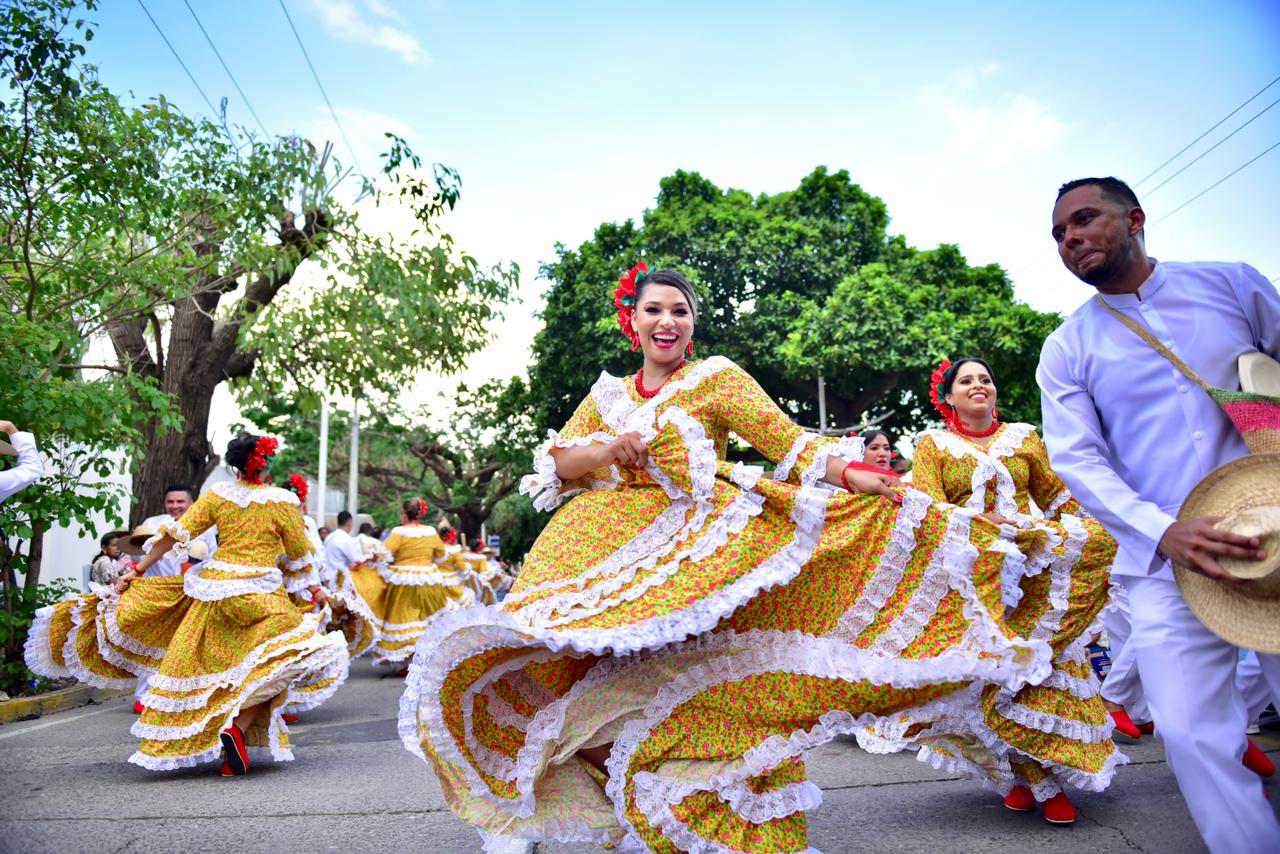
This parade celebrates the women who once sang while grinding corn in large wooden pilones. Dressed in vibrant, colorful skirts, the piloneras dance through Valledupar’s streets alongside their partners, who wear traditional peasant attire. The dance, “El Pilón,” is a joyful nod to the region’s agricultural roots.

April 30: Opening Ceremony
The festival officially opens with a tribute to Omar Geles, the legendary singer-songwriter and accordionist behind hits like “Los Caminos de la Vida.” Expect performances by top national and international artists, making it a night to remember.
Valledupar beyond the Vallenato Festival
Valledupar, in northern Colombia, is known as the “cradle of Vallenato”. The city is crossed by the Guatapurí River, whose name means “cold water” and rises in the Sierra Nevada de Santa Marta.
Its historic center, with eight blocks of colonial buildings, houses the Plaza Alfonso López, where the church of the Immaculate Conception and the church of Our Lady of the Rosary stand out. In them lie the wood carvings of the Santo Ecce Homo (1536), patron saint of Valledupar, and the Virgen del Rosario (1534).

In the main square is the 'Francisco El Hombre' stage, a place for cultural events. Its surroundings offer a varied gastronomy and the Calle Grande Artisan Center is located there, ideal for shopping during the Vallenato Festival. A few minutes away, the Accordion Museum exhibits the evolution of this key instrument in Vallenato folklore.
To explore the city’s cultural and natural highlights, consider a tour with Vallenatour, a local operator offering guided trips to Valledupar’s most captivating spots. For convenient stays, hotels like Hotel Sonesta, Hotel Sicarare, Casa de los Santos Reyes, or Casa Rosalía place you in the heart of the action, just steps from festival events.
Things to Do Near Valledupar During the Festival
The Vallenato Festival is a great opportunity to explore the region’s natural and cultural treasures. One popular option is the “Route of the Rivers and Tradition,” a journey that combines nature, folklore, and local cuisine for a memorable experience. Here are some highlights along the Guatapurí and Badillo rivers:

Balneario Hurtado
Ideal for people who want to enjoy a relaxing environment near the river that rises from the Sierra Nevada de Santa Marta, adorned with extensive vegetation. It is located only 10 minutes from Valledupar by road and by the same main road you can reach the new Parque La Provincia, adorned with figures of animals in stone, green and dry gardens, water mirrors and a bio-healthy gym, among others.
La Mina Spa
Along the Badillo River, this natural pool is framed by massive rocks, famously described by Nobel laureate Gabriel García Márquez as “huge, polished stones like prehistoric eggs.” About 9 km away, the indigenous village of Atánquez offers stunning views of the Sierra Nevada foothills, ideal for a post-festival getaway.
La Vega Beach Resort - Patillal
Located 20 minutes from Valledupar, this Badillo River spot is a haven for relaxation and local cuisine, including dishes like stewed goat, chicken stew, and fresh fish. On the way to La Guajira, stop by La Junta, a hub for vallenato composers and home to a guitar-focused festival.
South of Valledupar, La Paz is known for its musical heritage and delicious almojábanas (cheese bread), while Pueblo Bello, to the west, is a gateway to the Arhuaco community’s sacred territory, Nabusímake, with its traditional straw and stone houses.

Birdwatchers will love Valledupar’s proximity to the Ciénaga de Zapatosa, Serranía del Perijá, and Sierra Nevada, which together host up to 500 bird species, including 100 migratory ones. Recommended spots include Los Besotes Ecopark, the Chamicero del Perijá Reserve, and Los Tananeos, where you can combine birdwatching with adventure during the festival.
Related articles