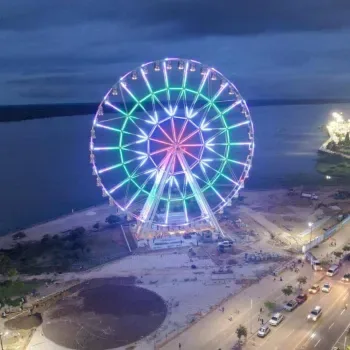
Just three hours by car from Cali, Popayán is one of the most important tourist destinations in southwestern Colombia. It is commonly called “the white city” due to the color of the houses that adorn its colonial architecture.
Founded in 1537, it is one of the oldest cities not only in Colombia but in all of America. This historical tradition allows visitors to enjoy a wide range of tourist attractions.
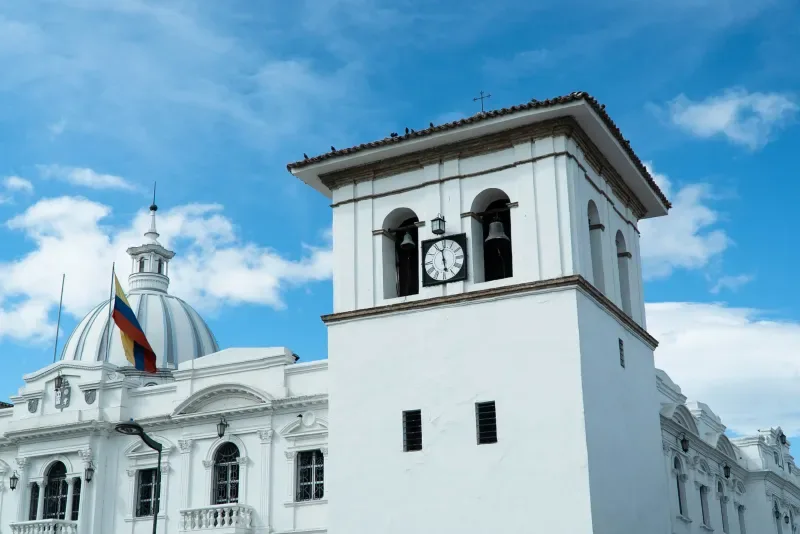
Walking through the historic center should be the starting point of any visit to Popayán, as it is one of the cities on the continent that best preserves the history of architecture from the 17th, 18th, and 19th centuries. Caldas Park is the main square of the city, from which it expanded. Around it are colonial and republican buildings surrounded by lush vegetation.
Religious Tourism
Religious tourism is inseparable from the city's history, and the best time to experience it is during Holy Week, whose celebration has been recognized by UNESCO as part of the Intangible Cultural Heritage of Humanity. During this event, Popayán families parade ancient religious images carried on wooden platforms supported by the shoulders of “cargueros,” a role passed down from generation to generation.
As part of this Catholic celebration, the Religious Music Festival is also held. With over sixty years of history, it features choirs and soloists recognized for the quality of their sacred music repertoire.
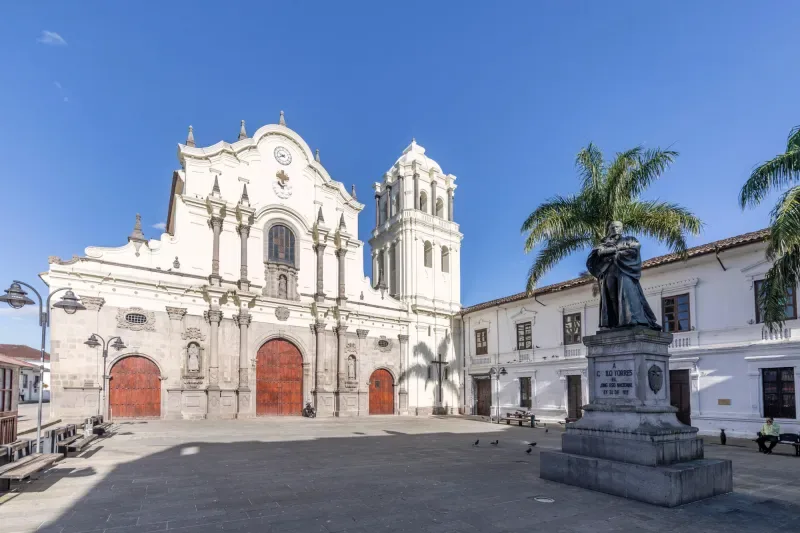
Whether during Holy Week or any time of the year, religious architecture is part of Popayán’s tourist attractions. The Church of San Francisco, the Ermita de Popayán, the Belén Sanctuary, and the Temple of the Incarnation of the Nuns are among the most notable temples, both for their construction and the artistic works preserved inside.
Places to Visit in Popayán
The Clock Tower, commonly called “the nose of Popayán,” was built in the 17th century and features a bronze clock brought from London. Tour guides will tell you the stories and legends surrounding its mechanism, and even mention that the absence of a minute hand symbolizes how time stands still in the white city.
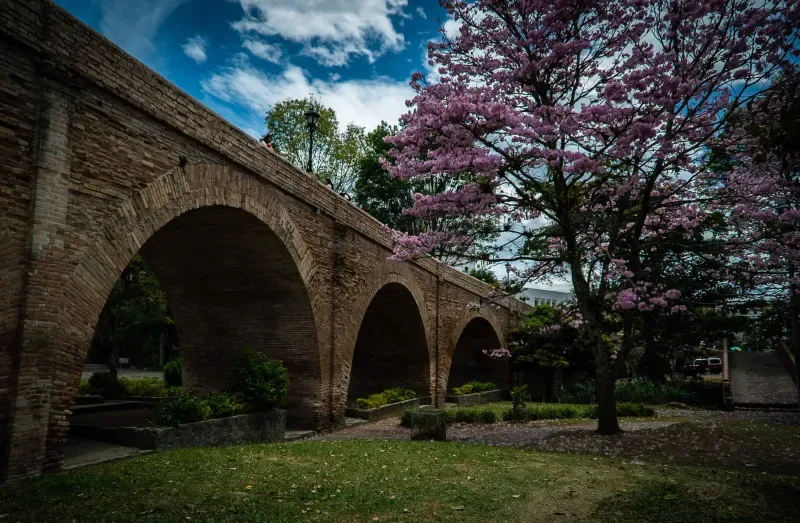
Built at the end of the 19th century, the Humilladero Bridge takes its name from the terrain’s slope that once forced people to walk bent over, almost on their knees. The bridge offers one of the best views of the city, making it an unforgettable photo spot.
The main pre-Columbian and archaeological monument of the city is Morro de Tulcán. Originally, it was a cemetery of the Pubenence indigenous people, where they worshipped their gods. When a road was built, it was discovered that this hill was artificial and contained numerous tombs and archaeological remains of great historical importance. It also features a monument honoring the city’s founder, Sebastián de Belalcázar.
Rincón Payanés is a miniature replica of the city, including scale copies of its main buildings. Also known as “pueblito patojo,” it’s one of the most popular tourist spots, featuring permanent art exhibitions and local handicraft sales.
Hacienda Calibío, located on the northern outskirts of Popayán, is one of the landmarks of Colombia’s independence wars. It was the site of a key 1814 battle where Spanish forces led by Juan Sámano were defeated and later hosted Liberator Simón Bolívar in 1826.
Outdoor Activities
If you are looking for outdoor activities, we recommend visiting the Puracé National Natural Park, declared a UNESCO Biosphere Reserve in 1979.
Located an hour and a half from Popayán by road, it is one of the top destinations for lovers of ecotourism and trekking. The park lies in a volcanic area, and its name—Puracé—means “mountain of fire” in the local Quechua language.
From a hydrological standpoint, the park is perhaps Colombia’s most important water source, as it is the origin of three major rivers: the Magdalena, the Cauca, and the Caquetá. It also features beautiful lagoons.
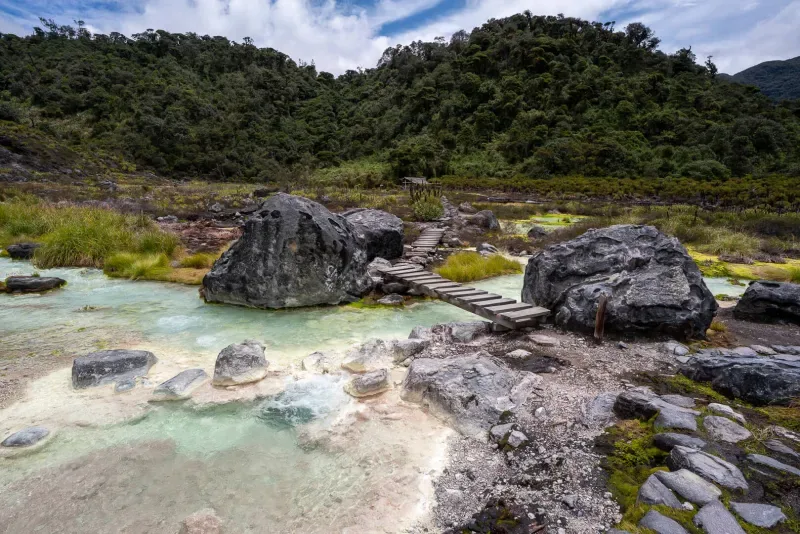
Visitors can enjoy a variety of activities such as hiking, with trails of varying difficulty and length for all experience levels. You can also observe cultural heritage and diverse wildlife and flora.
Near Popayán, there are other important destinations for visitors:
- Silvia: Known for its community, ethnic, and agrotourism activities.
- Coconuco: Part of the Puracé municipality, famous for its hot springs with medicinal properties.
- Tierradentro: Features an Archaeological Park declared a UNESCO World Heritage Site in 1995 for its significant pre-Columbian cultural legacy.
Payanese Gastronomy
Linked to its history, Popayán’s gastronomy has a rich tradition born from the fusion of Spanish, Indigenous, and Afro-descendant cultures. Its growth and evolution are showcased each September at the Popayán Gastronomic Congress, where more than thirty thousand people enjoy typical local dishes.
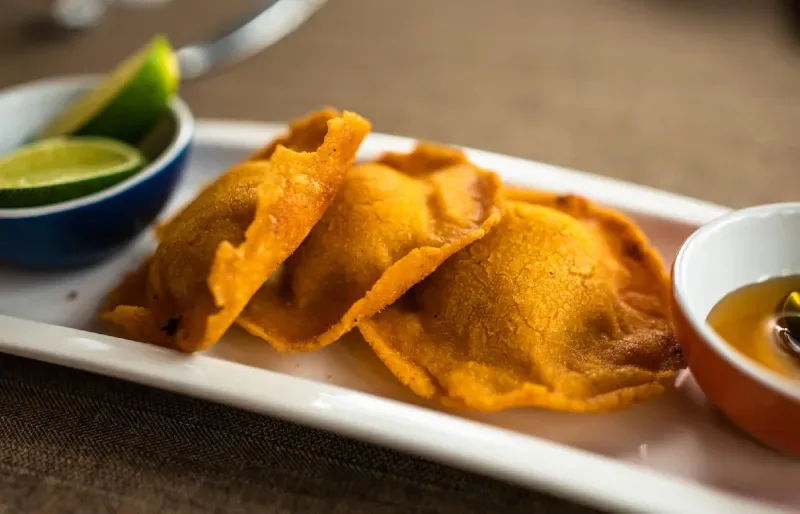
Such is its culinary importance that the city was recognized by UNESCO as a Creative City of Gastronomy. We recommend trying its dishes—empanadas and tamales—seasoned with the traditional “pipián,” a local stew made from potatoes, peanuts, tomatoes, onions, and garlic. Also try the “carantanta” (fried corn snack) and various soups.
You can also experience the corn culture, where you’ll learn how to make carantantas, tortillas, and other local foods.
Traveling to Popayán is a journey into the colonial past of southwestern Colombia, where architecture, iconic celebrations, and traditions will captivate you.