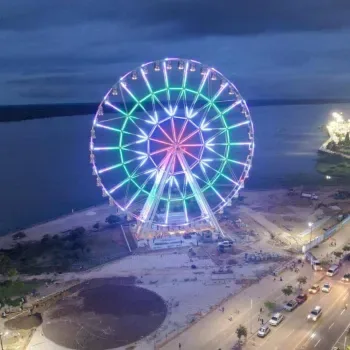
On the banks of the majestic Orinoco River in the easternmost part of the country, Puerto Carreño is the gateway to the vast untamed savannas typical of the Orinoquía in northern Colombia.
Three rivers and a plain that stretches to the horizon surround this city, the only one hidden in this rugged area that safeguards natural wonders such as El Tuparro National Natural Park and the Raudal de Maipures.
Although nature is the highlight here, Puerto Carreño also boasts captivating cultural diversity, as the llaneros, inhabitants of the Orinoquía dedicated to cattle ranching, and indigenous peoples, guardians of the wisdom of their ancestors and the legends born in these mythical lands, coexist there.
Attractions
El Tuparro National Natural Park
A must-stop for naturalists, this vast park covers an important stretch of the Orinoco and two of its tributaries, and protects much of the region’s characteristic wildlife.
Some activities that might interest you are navigating the river rapids that give the park its name and hiking the Ancaconda trail, which begins near the park offices and ends at a fascinating pond.
With its features, including hundreds of bird species, sun-drenched plains, and many viewpoints, the park attracts a wide variety of visitors: from flora and fauna enthusiasts to photography lovers.
Nature, Wildlife
Raudal de Maipures
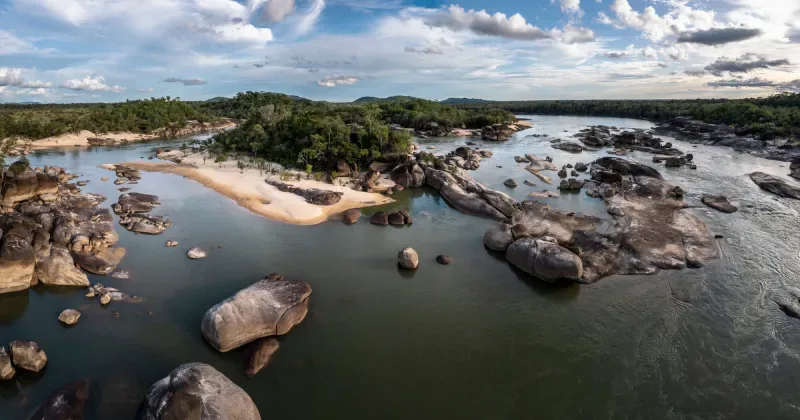
It is difficult to grasp the power of the Orinoco waters without witnessing it firsthand. A perfect place to do so is these rapids in El Tuparro Park, where several branches of the river gather in a narrow channel decorated with vivid vegetation. The Prussian naturalist Alexander von Humboldt was so moved by Maipures that he declared it the eighth wonder of the world. However, not many tourists make it there to share his amazement.
If you visit this destination, pay attention to the rock known as El Balancín, which seems about to topple among the rapids, but the force exerted is not enough to bring it down. From Cerro Guahibo, you can see the full panorama of the rapids and the savannas stretching in every direction.
River
Bojonawi Nature Reserve
Resting on the Orinoco and a short distance south of Puerto Carreño, this nonprofit nature reserve hosts a biodiversity of about 1,500 plant and animal species,
including imposing felines such as the puma and jaguar, and large otters. Along the many trails into the reserve, you will reach the sparkling El Pañuelo Lagoon, which lies between the river and the endless savannas.
Wildlife
Mirador del Cerro de la Bandera
From this hundred-meter-high rock you can enjoy panoramic views of the city and the Orinoco like nowhere else. Climb it in the early hours of the day and you’ll see the sunrise over the Venezuelan plains on the other side of the river.
Viewpoint
Experiences
Pink River Dolphins of the Orinoco
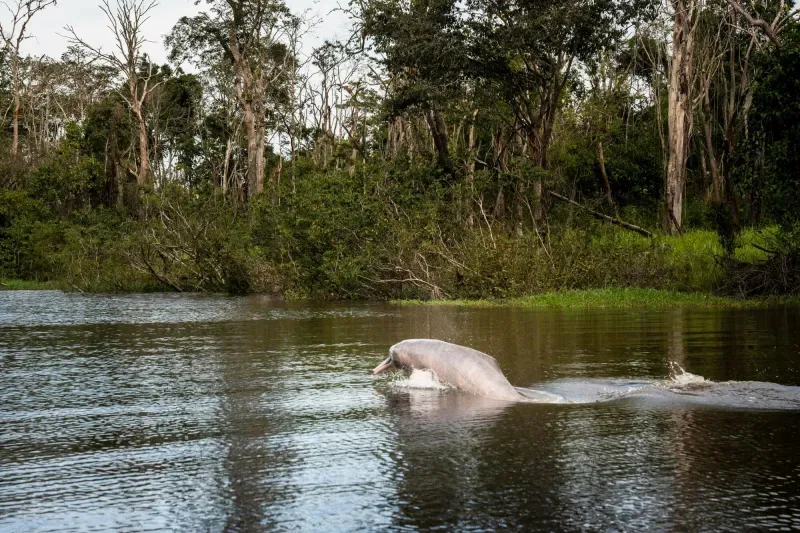
The mighty rivers surrounding Puerto Carreño are the perfect place to spot the cheerful pink river dolphins. You can find them at the mouths of the Bita and Meta rivers, and in different parts of the Orinoco. You can book a boat tour in the city, but keep in mind that to get closer to them, a small motorboat is ideal.
Wildlife
Casa de la Cultura
In this cultural center in the heart of the city, you will discover typical llanera music, performed by young local artists who gather there to play the harp, maracas, cuatro, and tiple, essential instruments for this musical genre so representative of the region. The traditional dance of the Orinoquía, the joropo, is also present in this artistic space.
Culture, Wildlife
Practical details
Accommodation
The hotels in Puerto Carreño are concentrated around Santander Park, the central part of the city. Most accommodations are budget-friendly, simple but pleasant, though there are one or two slightly more upscale options.
Although there is no lodging available inside El Tuparro National Natural Park, some tourist agencies provide tents for camping on the surrounding islands, if you’re looking for a more rugged option.
Getting there
Most tourists arrive in Puerto Carreño by air, on flights connecting the small local airport with the Colombian capital. In the dry season, it is also possible (though difficult) to travel by land in off-road vehicles.