La Ciénaga Grande de Santa Marta may seem like just a large body of water between the cities of Barranquilla and Santa Marta, but few travelers know it hides a world of lakes, mangroves, rivers, swamps, and estuaries, forming one of the most biodiverse sites in the Colombian Gran Caribe.
The natural wonders of this region are joined by another: the palafito villages, floating communities of the Ciénaga Grande de Magdalena that have survived conflicts, droughts, and dwindling resources without abandoning their unique culture or way of life.
The Ciénaga Grande de Santa Marta Flora and Fauna Sanctuary is a protected area covering the southern part of the ciénaga, safeguarding small lakes, rivers, mangroves, and the main lake.
To reach the floating villages and the most notable nature spots, it’s ideal to start from the municipalities of Ciénaga in the north or Sitionuevo in the west. But if you’re a fan of magical realism, you might prefer visiting the nearby municipality of Aracataca, the picturesque birthplace of Colombia’s most famous writer, Gabriel García Márquez.
Attractions and experiences
Nueva Venecia and Buenavista
From the boat navigating the chocolate-colored waters of the Ciénaga de Pajaral, you’ll see silhouettes appear on the horizon. First a few, then more, until the water is filled with colorful wooden houses like anchored boats. Before your eyes, Nueva Venecia unfolds, the largest palafito village in the Ciénaga Grande and one of the few remaining in Colombia.
Over three hundred houses rise on stilts, separating narrow channels where small canoes and rafts transport locals. Dogs and cats, however, prefer to swim through these watery streets.
Only two structures, though on stilts, are more solid than the rest: the church and the modern football field, built in 2015 and funded by Colombian footballer Radamel Falcao.
Buenavista, located slightly east in the Ciénaga del Tigre, is a smaller but equally striking floating village, where inhabitants share the same unique lifestyle as those in Nueva Venecia. Football is also the favorite sport: their "stadium," called Metropolipalo, was built by piling sand between wooden stakes embedded in the lakebed. The stands are simply canoes filled with spectators during matches.
In both villages, the main activity is fishing, but tourism is becoming a significant income source, and travelers are warmly welcomed. To visit, take a boat from Sitionuevo or Puebloviejo, near Ciénaga, and enjoy the stunning landscapes and rich fauna of the Ciénaga Grande along the way.
Culture
Ciénaga Grande de Santa Marta Flora and Fauna Sanctuary
This natural reserve, protecting much of the country’s wetlands, hosts a wide array of ecosystems and diverse terrains, including lakes, rivers, streams, swamps, and mangroves. A favorite for bird enthusiasts, the sanctuary is home to about two hundred species, both migratory and native. But the wildlife isn’t limited to wading birds; you’ll also see manatees, monkeys, iguanas, and turtles.
Excursions to the reserve depart from the nautical dock in Puebloviejo, on the outskirts of Ciénaga, located along the road connecting Santa Marta and Barranquilla.
Nature, Wildlife
Aracataca
The microclimate of the Gran Caribe colombiano may seem ideal for adventurous and nature-loving personalities, but one place stands out for literature lovers: Aracataca, the birthplace of Colombia’s greatest creative genius and father of magical realism, Gabriel García Márquez.
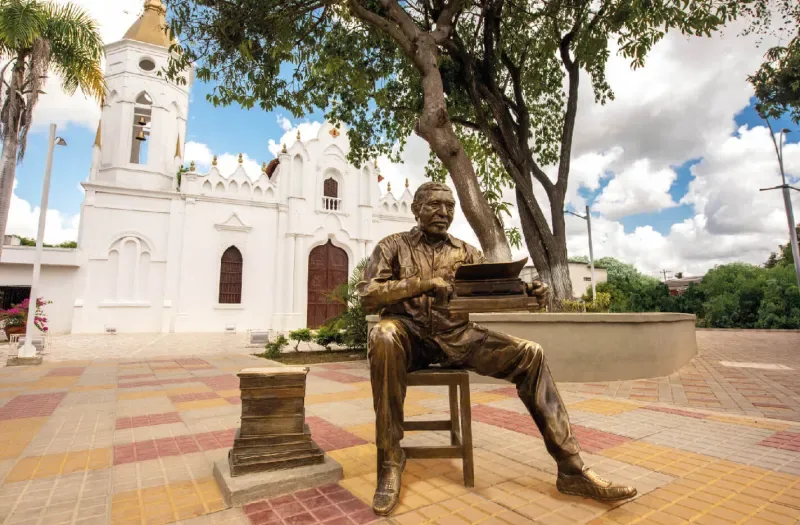
Though the Nobel laureate left the city in his youth, the eccentric settings and characters of the place are clearly reflected in his early works. At the museum set up in his childhood home, you can glimpse Aracataca in its heyday.
Culture
Practical details
Accommodation
Both Barranquilla and Santa Marta offer a wide range of accommodations, and from either city, you can take day trips to the main attractions of the Ciénaga Grande region.
Arrival
To visit the cities and villages of the Ciénaga Grande de Santa Marta, you can fly to the airports in Santa Marta or Barranquilla. The latter has fewer international connections, but both offer various domestic flight options to ease your visit. For a broader international offer, the airport in Cartagena is less than three hours away by car.