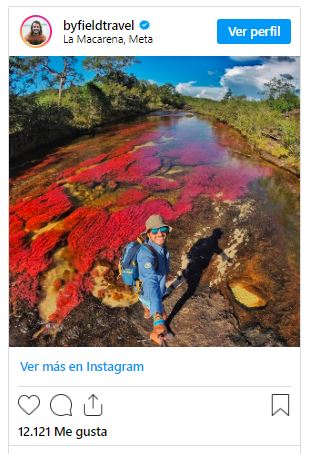
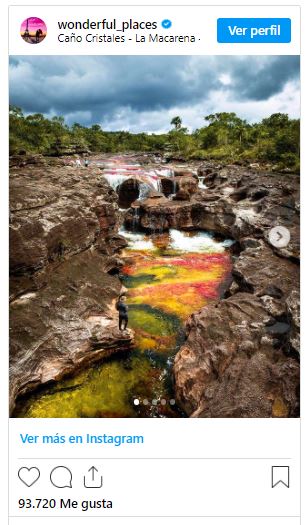
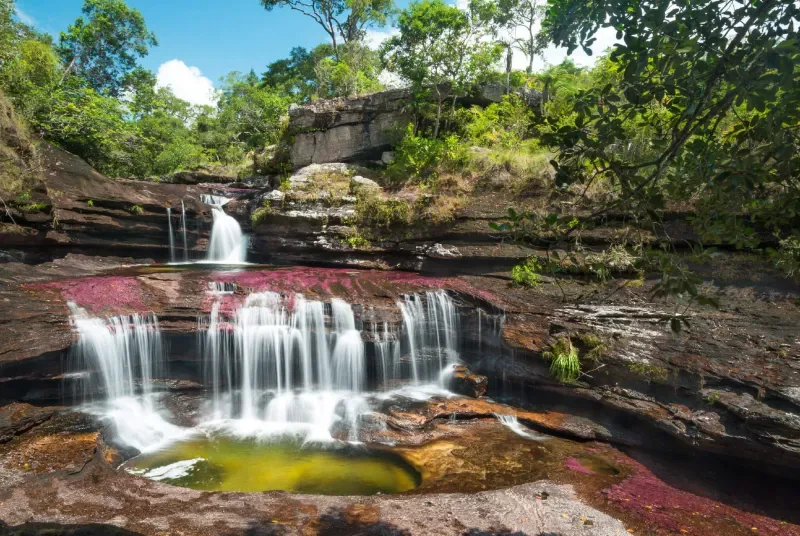
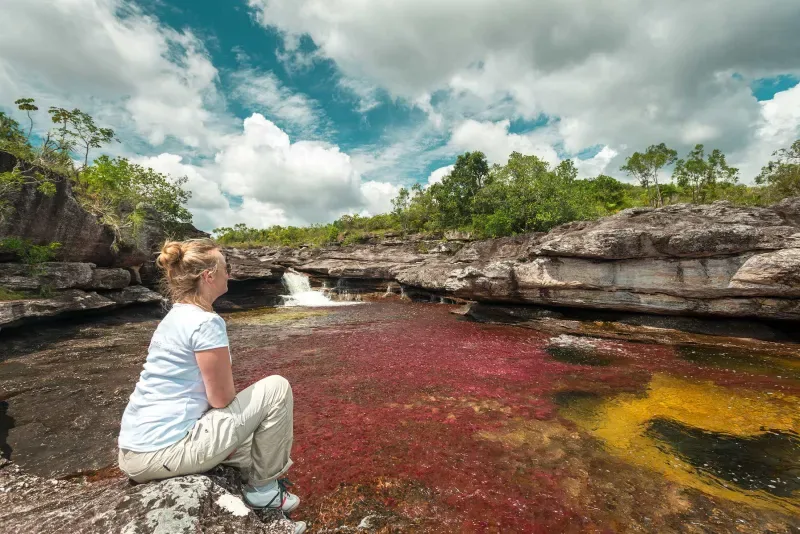
The municipality of La Macarena is located in the llanos orientales of Colombia in the Department of Meta. Famous for being the starting point to reach the “most beautiful river in the world”, Caño Cristales, this town also has other tourist attractions to offer.
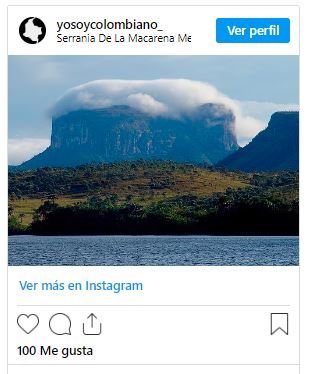
It is part of the natural reserve Parque Nacional Natural Sierra La Macarena, where multiple remote places of great value can be found. Here, the Andean, Orinoquía, and Amazon regions converge along with their respective ecosystems.
You can reach La Macarena by air from Bogotá, Villavicencio, Cali, and Medellín. It is also possible to arrive by land from Villavicencio, but the journey takes approximately seventeen hours.
Located along the Río Guayabero and with an average temperature of 24°C, this town is the gateway to a world that was once closed to tourism due to armed conflict and is now reborn. As part of this process, its inhabitants have been trained to work as tourist guides, supporting both visitors and the conservation of the environment.
Also of interest: Tourism and post-conflict initiatives in Colombia
What to visit in La Macarena
To begin, you can visit the Botanical Garden of La Macarena, located in the village of La Esperanza. It is a 72-hectare area dominated by the Amazon ecosystem. This place is dedicated to the protection and conservation of flora and fauna, as well as research and environmental education. It is ideal for bird watching due to the number of species that inhabit the area. During the summer, tourist services are offered with the company of specialized guides.
Madrevieja del Carmen is a private reserve whose purpose is to restore the biodiversity of its 90 hectares after having been used as grazing land. Here you can go hiking through native forests and jungles, practice bird watching, and record different species of flora and fauna.
Also of interest: Visit Caño Cristales, a natural wonder
The Río Guayabero is the main route connecting natural attractions near the urban center of La Macarena. It is named after the Indigenous community that once inhabited these lands. After one hour of navigation, you can reach the Raudal de Angosturas, a narrow canyon formed between ancient smooth rocks containing petroglyphs that tell the story of the first inhabitants of the Parque Nacional Natural Tinigua.
With an expert guide, several flat trails can be explored. These paths pass through jungle ecosystems, forests, savanna landscapes with freshwater ponds surrounded by native vegetation, and palm trees up to thirty meters tall known as morichales (typical of the Eastern Plains), as well as numerous creeks and streams. These routes are ideal for bird watching.
One of these paths leads to La Ciudad de Piedra, a set of the oldest rock formations in the hemisphere, shaped by the force of water, and part of the Guiana Shield, estimated to be over one billion years old.
Astonishing findings
With precise forms arranged in a labyrinthine layout, this destination is similar to others found in the Departments of Vichada, Guaviare, Guainía, and Caquetá. Here, the Indigenous Tiniguas and Guayaberos created rock paintings that can be observed while taking in the surrounding nature.
La Laguna del Silencio is a wildlife refuge where the local fauna can be observed, as boats do not use motors to preserve the environment. Its waters originate from the Sierra de la Macarena, making it an ideal place to connect with nature. Adorned with flocks of white herons, the sounds of nature make the experience unique.
In the Río Guayabero, sport fishing is also possible. Fish such as payaras, catfish, and amarillos can be found, particularly from January to March in the more abundant areas of the river.
La Macarena's gastronomy includes grilled meat or “mamona,” stewed free-range chicken, and fish. Plantain prepared with panela or fried, and rice bread, make the meal a true delight, often accompanied by lemonade.
La Macarena is a privileged natural destination, where sunsets surprise visitors with vibrant shades of orange, red, and violet that speak of a land worth knowing and protecting.